
Freestanding Heavy-Duty Stainless Steel Utility Sink
As an amazon associate I earn from qualifying purchases.
You’ll want a freestanding stainless steel utility sink that combines durable 304 stainless steel construction with practical features like pull-down faucets, efficient drainage systems, and spacious basins to handle everything from heavy-duty cleaning tasks to pet bathing and laundry work. Look for 18-gauge or lower thickness for ideal impact resistance, adjustable legs for stability, and reinforced frames that enhance longevity. The right sink transforms your workspace and simplifies maintenance. Discover what specific features matter most for your needs.
Freestanding Stainless Steel Utility Sink with Splash Back
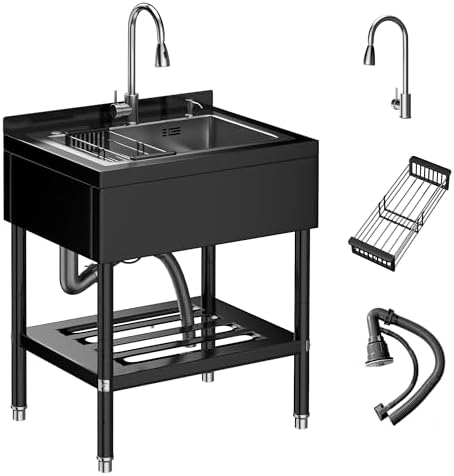
- Commercial-Grade Stainless Steel Construction:Built with durable 304 stainless steel, this commercial stainless steel si…
- Deep Large Basin Freestanding Design:This freestanding sink features an extra-large single basin perfect for washing too…
- Multi-Functional Pull-Out Faucet System:Included professional pull-down faucet with 360° swivel provides full sink cover…
If you need a tough sink for messy jobs around the house, this freestanding stainless steel utility sink is worth checking out. I’ve been looking at options for my garage, and this one stands out because it’s built to handle the rough stuff without falling apart.
The sink is made from 304 stainless steel, which basically means it won’t rust or corrode even if you’re constantly splashing water and chemicals on it. The frame is reinforced too, so it’s not going to wobble or bend when you’re scrubbing dirty tools or giving your dog a bath.
What makes this sink practical:
- The basin is genuinely large, so you can fit bigger items like mop buckets or even medium-sized dogs without struggling for space
- The faucet pulls down and swivels 360 degrees, which sounds like a small thing but makes a huge difference when you’re trying to reach every corner of the sink
- Adjustable feet let you level it out on uneven garage or basement floors, so you don’t end up with water pooling on one side
- There’s a shelf underneath for storing cleaning supplies or whatever else you need within reach
- The drainage system is designed to prevent clogs with an X-shaped setup, and the rounded corners make cleaning much easier than sharp-edged sinks
Setting it up is straightforward. You don’t need to be handy or hire someone. Just connect the water lines, adjust the feet until it’s level, and you’re good to go.
Things to consider before buying:
- It takes up floor space, so measure your area first because it’s not a small fixture
- You need accessible hot and cold water lines nearby, which might be an issue in some garages or outdoor spots
- Since it’s one big basin, you can’t wash in one side and rinse in another like you could with a double sink
- The freestanding look is functional but not fancy, so if you want something that blends into a nice laundry room, this might not be your style
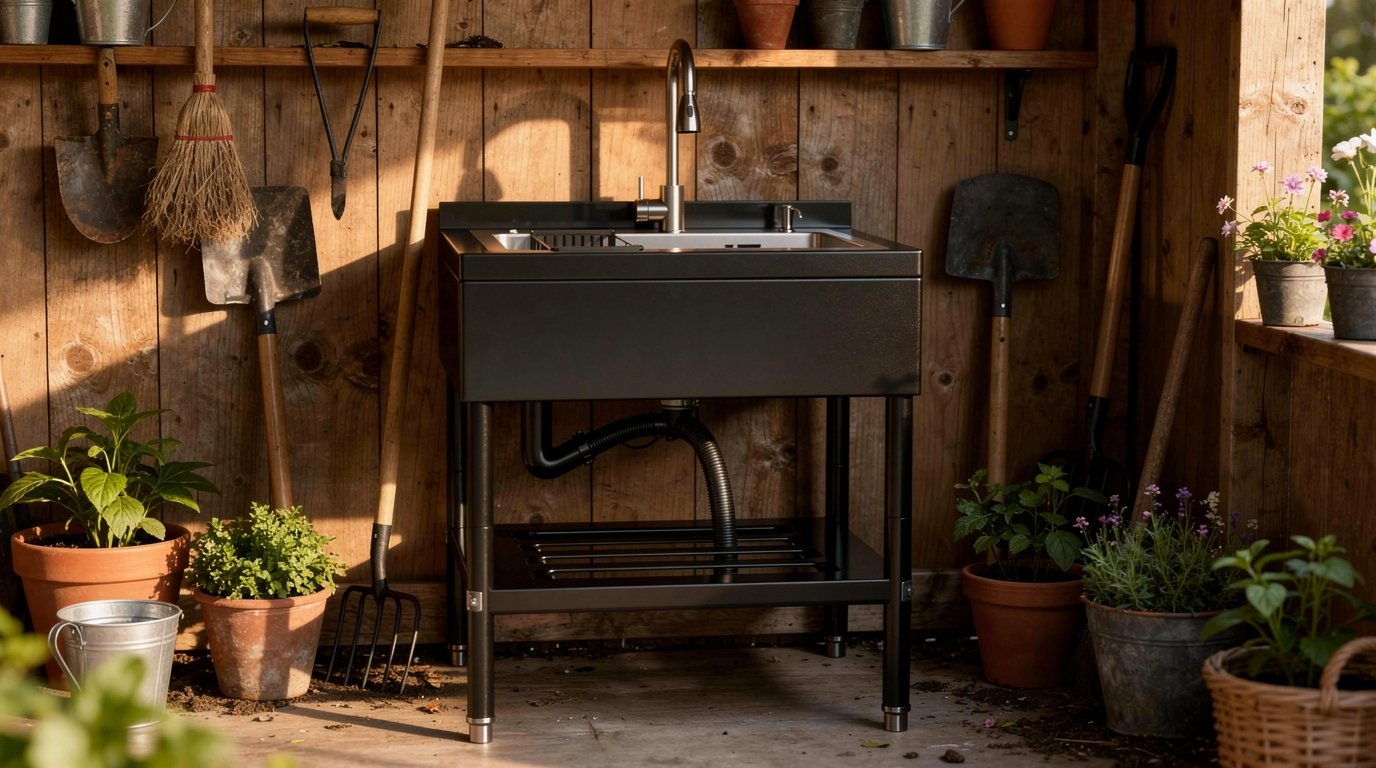
This sink works best if you have actual messy work to do—washing gardening tools, cleaning up after projects, bathing pets, or handling laundry tasks. It’s built for people who need something reliable that won’t give out after a few months of regular use.
Factors to Consider When Choosing Freestanding Heavy-Duty Stainless Steel Utility Sinks
When you’re selecting a freestanding heavy-duty stainless steel utility sink, you’ll need to evaluate several crucial factors that directly impact performance and longevity. Your decision hinges on material quality and durability, basin size and capacity, faucet type and functionality, drainage system efficiency, and installation requirements and complexity. Each of these elements plays a crucial role in ensuring you choose a sink that meets your specific needs and withstands demanding use.
Material Quality And Durability
Because you’ll be subjecting your utility sink to demanding conditions, material quality should be your primary consideration. You’ll want to select 304 stainless steel for superior corrosion resistance and longevity. Look for an 18-gauge or lower thickness to guarantee the sink withstands vigorous washing without denting or warping.
You should prioritize sinks featuring reinforced frames and powder-coated finishes that protect against impacts in tough environments. Smooth rounded corners reduce scratches and wear, extending your sink’s lifespan while simplifying cleaning tasks.
Don’t overlook drainage systems either. You’ll benefit from advanced X-shaped designs that promote efficient water flow and minimize clogging issues. These features work together to deliver a durable utility sink that’ll handle years of heavy-duty use reliably.
Basin Size And Capacity
Basin size and capacity fundamentally determine your sink’s functionality and versatility. You’ll want to evaluate an extra-large single basin, typically over 15 inches deep, which lets you easily submerge larger items like tools, pet bedding, or laundry without splashing. This depth accommodates heavy-duty cleaning tasks essential for workshops and garages.
The basin’s capacity directly impacts what you can accomplish. A larger basin expands your options for various cleaning projects, making your investment more practical long-term. You should also prioritize designs with smooth rounded corners, which simplify cleaning and maintenance within the basin itself.
Before purchasing, assess your available installation space carefully. Verify the basin fits comfortably without obstructing your workflow or accessibility. This strategic planning prevents frustration and maximizes your sink’s utility in your workspace.
Faucet Type And Functionality
Your faucet choice greatly impacts your sink’s versatility and user experience. You’ll want a professional pull-down design that gives you flexibility and reach for various cleaning tasks, from washing tools to bathing pets.
Look for a faucet with 360° swivel capability to guarantee complete sink coverage without repositioning. This feature proves essential when you’re handling larger items that demand accessible angles.
Prioritize easy switching between hot and cold water to accommodate different cleaning needs efficiently. You should also verify that your faucet features durable construction capable of withstanding heavy-duty use while requiring minimal maintenance.
Finally, confirm compatibility with your sink’s design to assure seamless installation and operation, particularly if your space is limited or usage is intensive.
Drainage System Efficiency
Efficient drainage is what separates a functional utility sink from one that’ll frustrate you during heavy-duty work. You’ll want an X-shaped drain design that greatly enhances water flow and minimizes clogging, especially during intense use.
The drain’s placement and angle matter greatly—they should facilitate rapid water removal and prevent standing water from pooling. This directly impacts sanitation and cleanliness.
Consider a high-capacity drain with a larger diameter to handle substantial water volumes quickly. Pair this with smooth rounded corners in the basin, which prevent debris buildup and simplify cleaning.
Don’t overlook maintenance. Regular cleaning of your drainage system keeps it operating at peak efficiency and extends your sink’s lifespan considerably.
Installation Requirements And Complexity
Because most freestanding heavy-duty stainless steel utility sinks are engineered for straightforward setup, you won’t need advanced plumbing skills to get one operational. You’ll simply connect the sink to your existing water lines, making installation accessible for most homeowners.
Look for models with pre-drilled faucet holes to eliminate additional modifications. Adjustable feet are essential—they guarantee stability on uneven garage or workshop floors, a critical requirement for safe operation.
Verify that your sink’s dimensions fit your installation space precisely. A properly sized unit prevents the need for extensive plumbing adjustments or fixture relocations.
Choose designs featuring integrated drain systems that minimize clogging potential. This reduces maintenance demands and installation complications, allowing you to focus on functionality rather than troubleshooting drainage issues.
Storage And Additional Features
Beyond basic functionality, modern freestanding utility sinks offer storage solutions and features that’ll maximize your workspace efficiency. Look for models with integrated bottom shelves that keep cleaning supplies organized and within arm’s reach, eliminating clutter around your work area.
You’ll want to prioritize sinks featuring advanced drainage systems that minimize clogs, reducing maintenance headaches. Adjustable legs guarantee stability on uneven surfaces, adapting to your specific installation needs.
Pay attention to design details like smooth, rounded corners that facilitate quick cleaning and prevent grime buildup. Choose faucets with pull-down sprayers and versatile functionalities—these enhance your cleaning capabilities for various tasks and improve overall adaptability.
These combined features transform your utility sink into a truly functional workspace.
Intended Use And Environment
Now that you’ve optimized your sink’s storage and efficiency features, you’ll need to match those capabilities to your specific tasks and environment. First, identify your primary use—whether you’re washing tools, doing laundry, or bathing pets—as this determines basin size and necessary design features. Next, evaluate your installation location carefully. Outdoor sinks face harsh weather and chemicals, requiring superior corrosion resistance, while garage installations demand durability against oil and grime. Assess your available space to guarantee a comfortable fit without workflow obstruction. Finally, consider whether your tasks require heavy-duty upgrades like reinforced frames or specialized drainage systems. These factors collectively guide you toward a sink that’ll perform reliably for years without constant maintenance headaches.
Frequently Asked Questions
What Is the Typical Lifespan of a Stainless Steel Utility Sink?
You’ll typically enjoy 15-20 years of reliable service from a quality stainless steel utility sink, though many last even longer with proper care. You can extend its lifespan by regularly cleaning it, avoiding abrasive scrubbers, and promptly addressing any scratches. You’ll want to dry it after use to prevent water spots and corrosion. With consistent maintenance, you’re investing in a durable fixture that’ll serve you well for decades.
Can Freestanding Utility Sinks Be Installed Outdoors Year-Round?
Yes, you can install freestanding stainless steel utility sinks outdoors year-round. You’ll want to position them in covered areas to minimize direct weather exposure. Stainless steel resists rust and corrosion, making it ideal for outdoor use. However, you should drain the sink before freezing temperatures arrive to prevent water damage. Confirm proper drainage and foundation support for outdoor installations, and consider UV-protective covers during extreme weather conditions.
How Do I Prevent Water Spots and Stains on Stainless Steel?
You’ll prevent water spots and stains by drying your stainless steel sink immediately after use with a soft cloth. You can also apply a stainless steel polish or mineral oil to create a protective barrier. You shouldn’t use abrasive scrubbers or chlorine-based cleaners, as they’ll damage the finish. For hard water areas, you’ll want to wipe down surfaces more frequently. Regular maintenance keeps your sink looking pristine.
Are Utility Sinks Compatible With Standard Plumbing Fixtures?
Yes, you can use standard plumbing fixtures with utility sinks. Most utility sinks feature universal drain and supply connections that work with conventional faucets and fixtures you’ll find at any hardware store. You’ll want to verify your sink’s connection sizes—typically 1.5 inches for drains and 0.5 inches for supply lines—before purchasing fixtures. This compatibility makes installation straightforward, and you’re not locked into proprietary equipment or specialized components.
What Warranty Coverage Do Most Manufacturers Offer on Utility Sinks?
You’ll typically find that most manufacturers offer warranties ranging from one to five years on utility sinks. Standard coverage usually includes defects in materials and workmanship, protecting you against rust, corrosion, and structural failures. You should review each manufacturer’s specific terms carefully, as coverage varies considerably. Premium stainless steel models often come with extended warranties, while budget options might offer limited protection. Always check what’s included before purchasing to ascertain you’re getting adequate coverage for your investment.
Final Thoughts
You’ll find that investing in a quality freestanding stainless steel utility sink pays off through years of reliable performance. You should prioritize durability, basin size, and drainage efficiency based on your specific needs. Whether you’re outfitting a garage, laundry room, or workshop, you’ll appreciate how these sinks handle heavy-duty tasks. You can’t go wrong selecting a model that matches your space and usage requirements.
As an amazon associate I earn from qualifying purchases.
Related posts:
 10 Best Corner Bathroom Sink Vanity Units That Maximize Space
 The Best Backyard Kitchen Stations That’ll Upgrade Your Outdoor Cooking
 10 Best Kitchen Storage Ideas to Maximize Every Inch of Space
 Bathroom Storage Solutions: 10 Ideas That Maximize Your Space
 Best Outdoor Privacy Screens With Planters That Transform Any Yard
 10 Funny Hanging Planters That’ll Make Your Garden the Talk of the Block
 10 Best Cat Planter Pots for Indoor Plants & Succulent Lovers
 Ultimate 10 Outdoor Patio Water Fountains for Garden Serenity