
How to Style a Deck Box so It Blends With Your Outdoor Decor
As an amazon associate I earn from qualifying purchases.
Your deck box doesn’t have to be an eyesore. With the right styling choices, you can transform it into a feature that enhances your outdoor space. By considering color, material, and placement, you’ll discover how to make your deck box look like it belongs—but first, you’ll need to understand which strategy works best for your specific setup.
Key Points Of Note
- Match the deck box color and material to existing furniture, deck, and plants for visual cohesion throughout your outdoor space.
- Coordinate textures by pairing wood finishes with natural furniture, woven patterns with rattan, and smooth surfaces with modern metal designs.
- Position the deck box strategically in corners or along deck sides, then conceal it with climbing plants and shrubs.
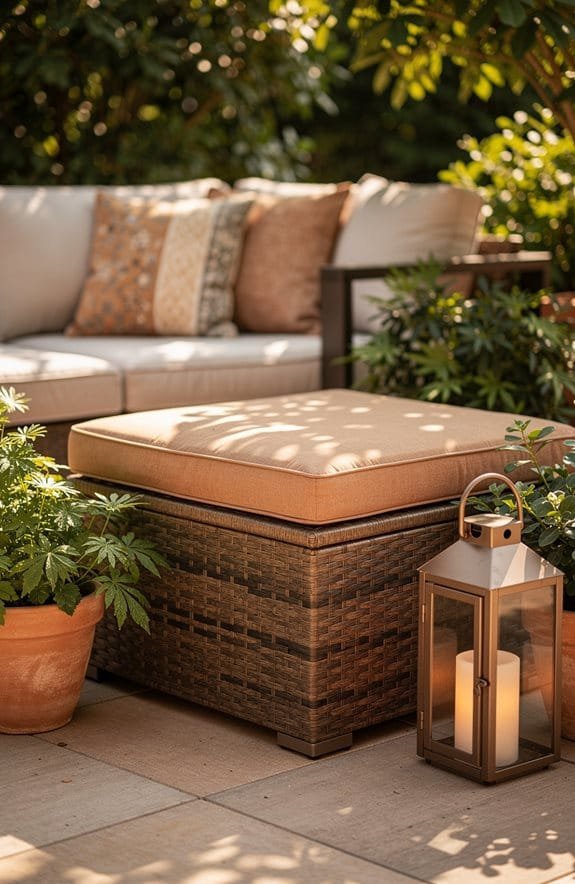
- Enhance the box’s appearance by adding potted flowers, succulents, and decorative lighting to transform it into an attractive focal point.
- Paint or stain the box to match your deck flooring—earthy tones for warm composite, neutrals for stone or concrete patios.
Choose a Color That Complements Your Landscape
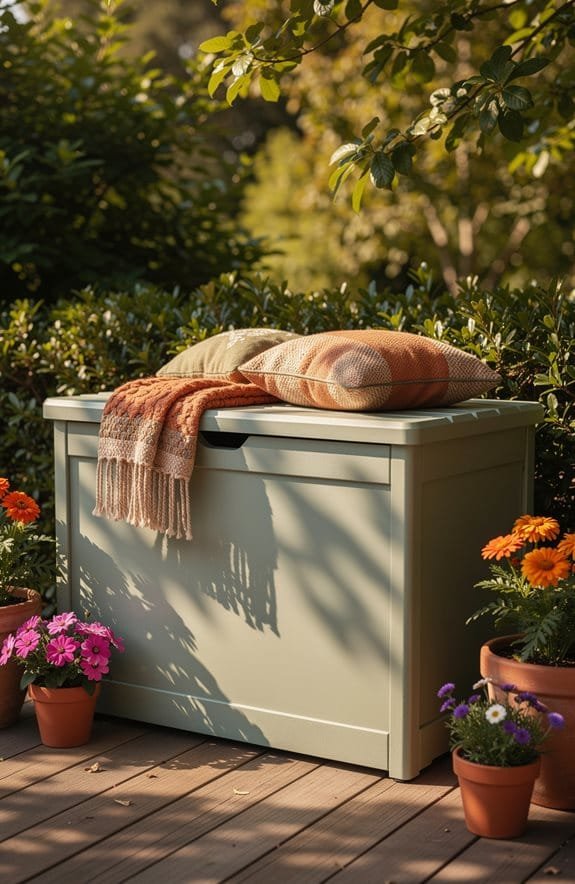
The color of your deck box sets the tone for your entire outdoor space, so it’s worth choosing carefully.
You’ll want to contemplate color psychology, which explores how different hues affect our moods and perceptions. Neutral colors like gray, tan, or black blend seamlessly with most landscapes, creating a calm backdrop.
If you’re drawn to bolder options, ponder seasonal trends that might inspire you. Spring suggests soft greens, summer calls for vibrant blues, fall features warm oranges and browns, and winter welcomes cool silvers.
Think about your existing deck, furniture, and plants when selecting your box’s color. A well-chosen shade enhances your outdoor space without clashing or overwhelming it.
You’re fundamentally making an investment in your yard’s overall aesthetic appeal and cohesion.
3. Match Materials With Your Existing Outdoor Furniture
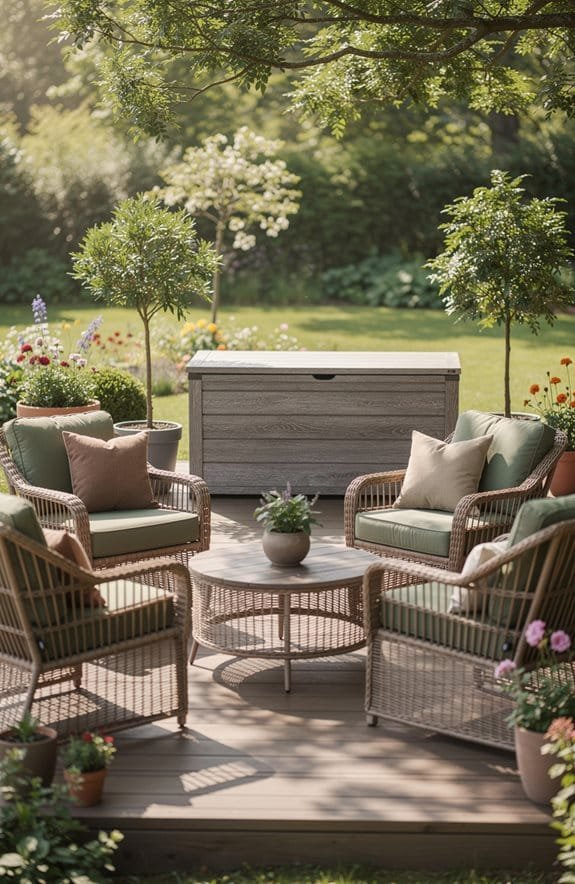
When you’re choosing a deck box, you’ll want to match the materials and finishes you already have around your outdoor space, whether that’s wood furniture, metal railings, or both.
Think about the wood tones in your chairs and tables—does your deck box need warm, rich browns or lighter honey shades?
Check if your existing pieces feature sleek metal accents that your box should echo. By coordinating these details, you’ll create a unified, polished look instead of having your deck box stand out as an awkward addition that doesn’t belong.
Wood Tone Coordination
Your deck box doesn’t have to clash with the rest of your outdoor space—matching its wood tone to your existing furniture creates a cohesive look that ties everything together.
Finding Your Perfect Match
Start by examining your current outdoor furniture closely. Notice whether your pieces feature light, medium, or dark wood finishes. This wood finishes comparison helps you identify your space’s overall aesthetic.
Color Matching Techniques
Bring paint samples or photos of your furniture to the store when shopping for deck boxes.
Hold the box next to your chairs and tables in natural sunlight, since lighting affects how colors appear. Look for boxes with similar stain colors and finishes.
If you can’t find an exact match, choose a tone that’s one shade lighter or darker—this creates visual interest while maintaining harmony throughout your outdoor area.
Metal Finish Compatibility
Two main metal finishes prevail in outdoor spaces: bronze and stainless steel, and you’ll want to match whichever one you’ve already got going in your yard.
Understanding metal finish types helps you create a cohesive outdoor look. When selecting your deck box, examine your existing furniture, railings, and hardware closely. The right outdoor metal compatibility guarantees everything works together beautifully.
- Bronze finishes pair well with warm, earthy tones and rustic decor styles
- Stainless steel complements modern designs and contemporary outdoor spaces
- Mixed metals can work if you balance them intentionally throughout your space
- Lighting matters because it highlights different finishes differently at various times
Check your gate hinges, patio furniture frames, and lighting fixtures. If they’re primarily bronze, choose a bronze deck box.
For stainless steel surroundings, pick matching steel hardware. This coordination makes your entire yard feel intentional and put-together.
Material Texture Pairing
Beyond metal finishes, the surface texture of your deck box plays an essential role in creating visual harmony with your outdoor space.
You’ll want to match your box’s texture with existing outdoor furniture to achieve a cohesive look.
Consider these texture-pairing options:
Wood textures – If your patio features wooden chairs or tables, choose a deck box with a natural wood finish or wood-grain appearance.
Woven patterns – Furniture made from natural fibers like rattan or wicker pairs beautifully with textured deck boxes featuring woven designs.
Smooth surfaces – Polished or sleek boxes complement modern metal furniture perfectly.
Contrasting textures – You can also intentionally mix rough and smooth surfaces for visual interest, as long as the overall color palette remains coordinated.
This approach adds depth without clashing with your existing décor.
4. Use Strategic Placement to Minimize Visual Impact
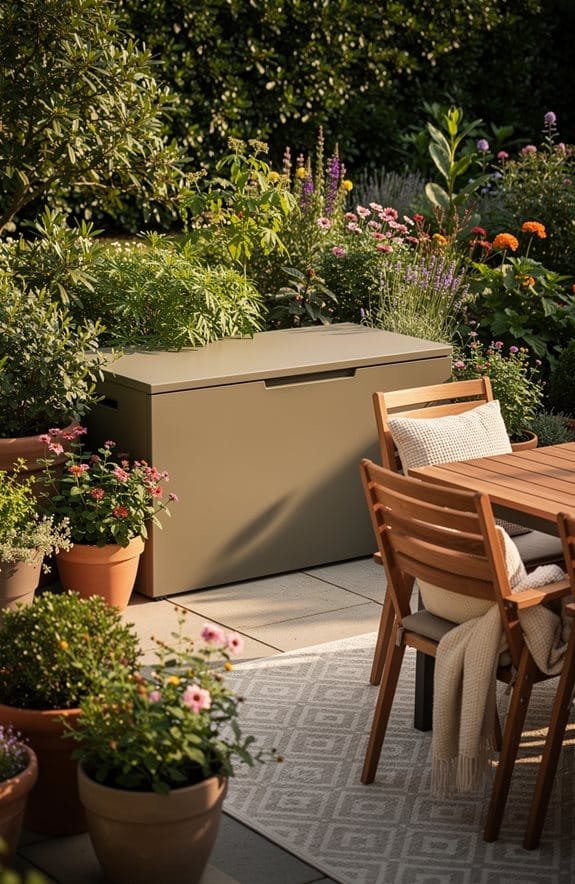
When you’re trying to keep a deck box from dominating your outdoor space, placement matters just as much as the box itself.
Smart placement can make or break your deck box’s visual impact on outdoor living spaces.
Strategic angles and hidden corners are your best friends here. Position your box where it’s useful but out of the main sight line from your patio or seating area.
Consider these placement strategies:
- Tuck the box into a corner near your deck’s edge or railing
- Place it behind landscaping, plants, or garden structures
- Position it along the side of your deck rather than center stage
- Angle it to face away from your primary viewing area
5. Incorporate Climbing Plants and Greenery
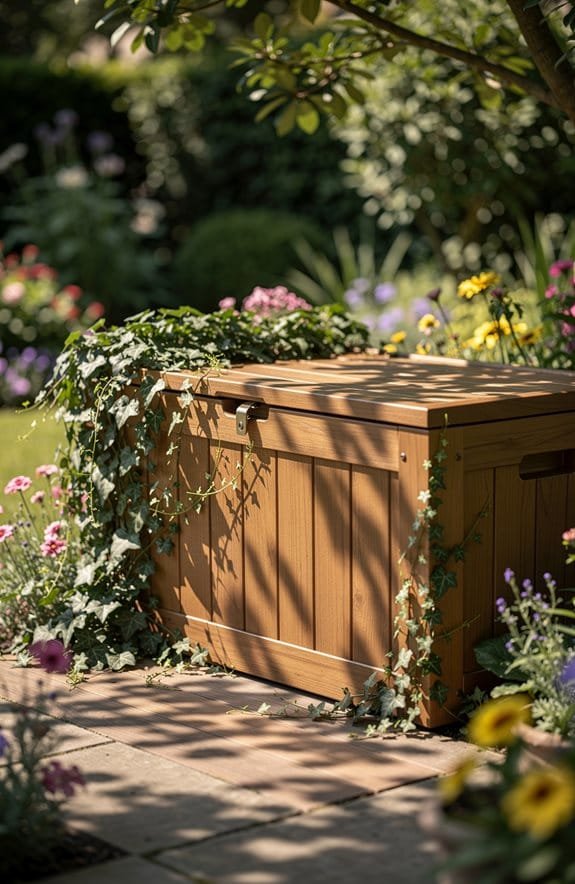
One of the most effective ways to blend your deck box into your outdoor space is by surrounding it with climbing plants and greenery.
Climbing vines like ivy or clematis naturally draw the eye upward and soften hard edges, making your box disappear into the landscape. You can train these vines on a trellis positioned behind or beside the box for maximum coverage.
Verdant accents surrounding the base work equally well.
Plant low-growing shrubs, ferns, or hostas around your deck box to create a lush border. These plants mask the structure while adding texture and depth to your patio area.
The combination of vertical climbing vines and ground-level greenery creates a seamless shift, allowing your deck box to blend harmoniously with your outdoor environment.
6. Add Decorative Accessories on Top
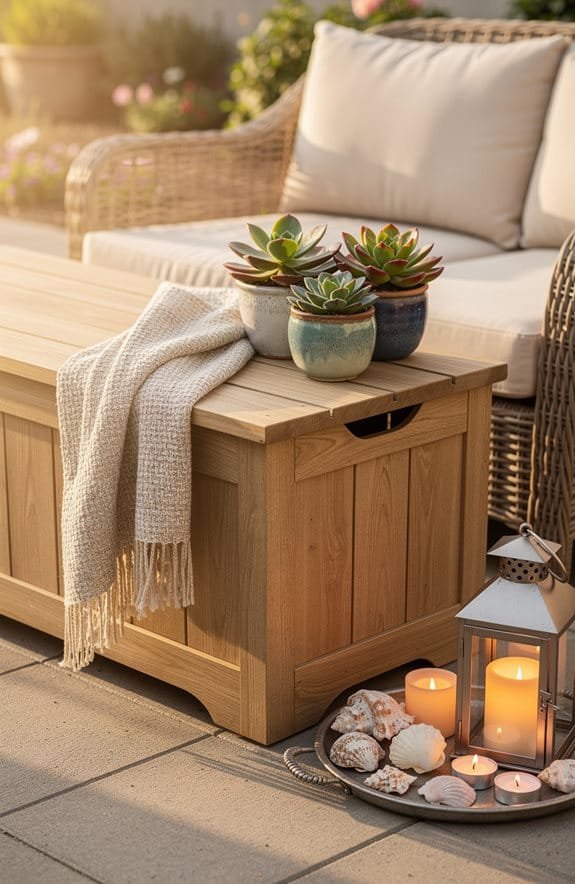
Once you’ve established your climbing plants and greenery, you can transform your deck box’s top surface into a focal point by adding plants and planters that complement your existing garden design.
You might arrange potted flowers, succulents, or herbs in varying heights to create visual interest, or place them strategically around decorative lighting options like solar lanterns or string lights that’ll brighten your outdoor space during evening hours.
These thoughtful additions not only make your deck box more visually appealing but also maximize your deck’s functionality by using vertical space efficiently.
Plants and Planters
Plants bring life and color to your deck box, transforming it from a plain storage container into an eye-catching garden feature.
You can arrange potted plants on top to enhance your outdoor aesthetics while maximizing your deck’s limited space. Consider these planting options:
- Trailing vines that cascade down the box’s sides for visual interest
- Colorful flowers that complement your deck’s color scheme
- Evergreen shrubs that provide year-round greenery
- Indoor plants in weather-resistant containers for versatile styling
Choose planters that match your deck box’s material and finish.
Terracotta, ceramic, or metal containers work well depending on your style preference. Arrange plants at varying heights to create dimension.
Water regularly and select species suited to your climate.
This approach turns your storage box into a beautiful focal point while keeping your deck organized and visually appealing.
Decorative Lighting Options
Why shouldn’t your deck box sit in the shadows when strategic lighting can transform it into a stunning nighttime feature?
You can highlight your deck box beautifully with the right lighting choices.
Lighting Ideas:
- String lights draped around your deck box create a warm, inviting glow that complements your outdoor space.
- Solar lanterns positioned on top provide eco-friendly illumination without requiring electricity.
- Uplighting from below emphasizes the box’s shape and texture after dark.
- Ambient lighting around the perimeter ties your deck box into the overall landscape design.
These lighting options don’t just look great—they’re practical too.
Solar lanterns charge during the day, providing free evening light. String lights add festive charm while illuminating your deck area.
Together, they transform your deck box from a simple storage solution into an attractive nighttime focal point that enhances your entire outdoor aesthetic.
7. Paint or Stain for a Custom Look
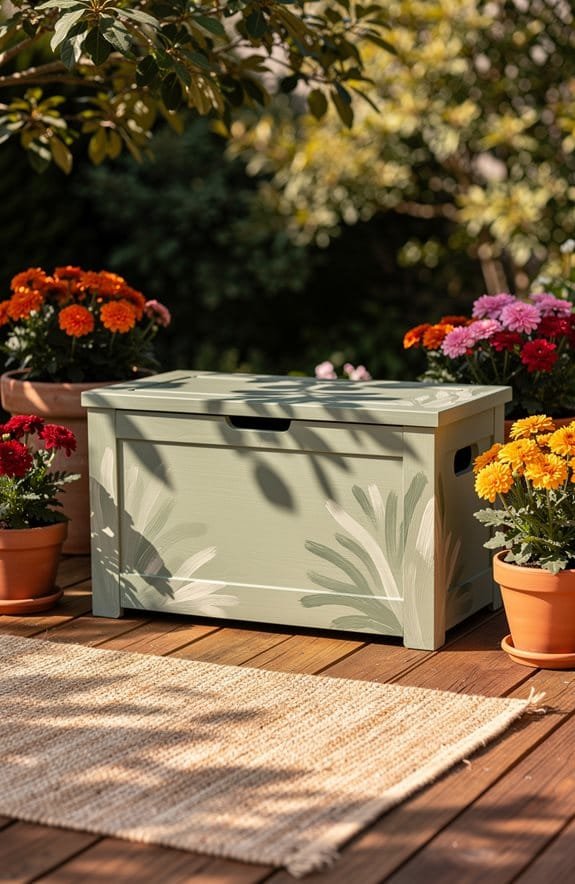
Two main options exist for transforming your deck box’s appearance: paint and stain.
Both methods offer distinct advantages for achieving your desired aesthetic while protecting the wood from weather damage.
Paint techniques provide unlimited color choices and complete coverage, letting you match your deck box to any outdoor theme.
Stain applications, meanwhile, enhance the wood’s natural grain while offering various tones from light to dark.
Consider these factors when choosing:
- Durability: Paint lasts longer but requires regular touch-ups; stain needs reapplication every 2-3 years.
- Maintenance: Paint hides imperfections better; stain shows wear more visibly.
- Cost: Stain costs less upfront but demands frequent renewal.
- Appearance: Paint offers bold colors; stain preserves wood character.
Both options work excellently for customizing your deck box.
Your choice depends on your preferred maintenance level and desired final look.
8. Coordinate With Your Deck or Patio Flooring
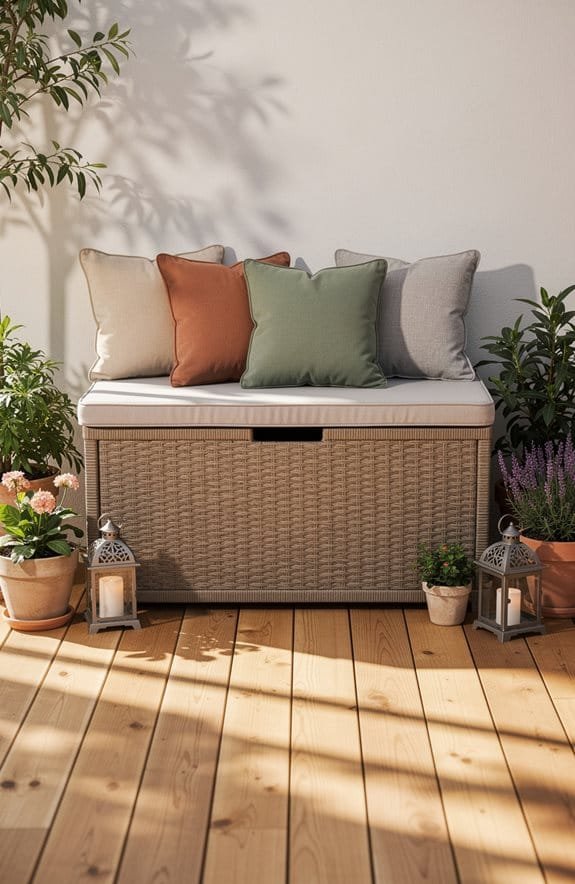
Once you’ve decided on paint or stain for your deck box, you’ll want to make sure it works well with the spaces around it. Your deck box should complement your deck aesthetic and flooring compatibility is key to achieving a polished look.
Start by examining your deck or patio’s color and material. If you’ve got composite decking in warm tones, consider earthy colors for your box. For traditional wood decks, matching or slightly contrasting shades work beautifully.
Examine your deck’s color and material first—earthy tones complement warm composite decking, while matching or contrasting shades suit traditional wood.
Stone or concrete patios pair well with neutral grays or whites.
Think about the overall vibe you’re creating. A cohesive color scheme ties your entire outdoor space together, making it feel intentional and well-designed.
Don’t hesitate to bring paint samples outside and observe them in natural light before committing.
9. Create a Cohesive Design With Surrounding Elements
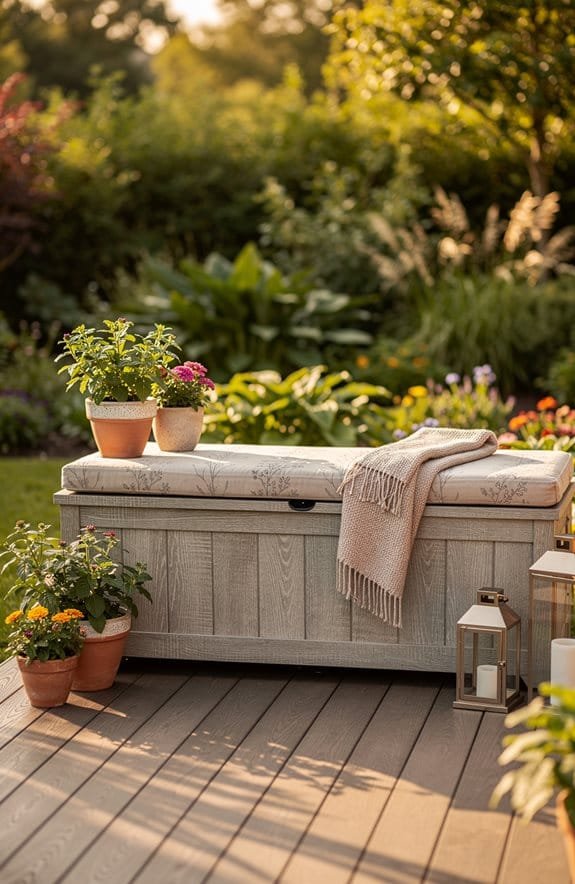
Beyond just matching colors, you’ll want to think about how your deck box fits into the bigger picture of your outdoor space.
Your deck box designs should work harmoniously with everything around it, creating a unified look that ties your entire outdoor area together.
Consider these elements when styling your deck box:
- Plants and greenery – Position flowering plants or shrubs near your box to soften its appearance
- Furniture placement – Arrange chairs and tables to frame your deck box naturally within the space
- Lighting fixtures – Use outdoor lights to highlight your box as a design feature
- Decorative accents – Add outdoor accessories like lanterns or planters that complement your box’s style
When all these pieces work together, your deck box becomes an attractive part of your outdoor design rather than standing out awkwardly.
This thoughtful approach transforms functional storage into a polished, intentional element of your outdoor living area.
10. Maintain Your Styled Deck Box for Long-Term Appeal
Your deck box won’t stay looking great without regular upkeep, so it’s important to establish a maintenance routine that keeps it in top shape.
Deck box maintenance involves cleaning your box seasonally to remove dirt, leaves, and debris that can accumulate on surfaces. Wipe down exterior panels with appropriate cleaner for your box’s material—wood, plastic, or metal each requires different care approaches.
Weather protection is essential for longevity. Apply protective sealant to wooden boxes annually, and use UV-resistant covers during extreme seasons.
Check hinges, latches, and drainage holes regularly to ascertain they function properly. Store items inside strategically to prevent moisture buildup.
Frequently Asked Questions
What Size Deck Box Works Best for Small Outdoor Spaces?
You’ll want a compact storage solution that matches your small deck designs. Choose boxes under 3 feet wide—they’re space-savers that won’t overwhelm your patio while you’re organizing cushions, tools, and garden supplies efficiently.
How Much Weight Can a Styled Deck Box Safely Hold?
You’ll want to check your deck box’s manufacturer specifications for exact load capacity, as weight limits vary by model. Most standard boxes safely hold 300-500 pounds, but you shouldn’t exceed safety guidelines to prevent structural damage or injury.
Do Deck Boxes Require Special Ventilation to Prevent Moisture Buildup?
You’ll want proper ventilation solutions in your deck box to prevent moisture buildup. Install vents or drill drainage holes for effective moisture control. This practice keeps your stored items dry and extends your box’s lifespan considerably.
Can Deck Boxes Be Moved Easily After Installation and Styling?
You’re capable of moving most deck boxes, but mobility matters based on material and mass. Lighter options offer easier repositioning. Consider castors or dollies during styling shifts to simplify relocation while maintaining your outdoor aesthetic appeal.
What’s the Best Climate for Outdoor Deck Box Placement?
You’ll want to place your deck box in shaded spots to prevent fading and material damage from UV rays. However, you can position it in sunny areas if you’re using weather-resistant materials and plan regular maintenance to preserve its appearance.
As an amazon associate I earn from qualifying purchases.
Related posts:
 10 Best Deck Boxes with Wheels for Effortless Organization
 10 Best Deck Tiles That Transform Your Outdoor Space Instantly
 Outdoor Organization Makeover: Transform Your Patio With a Deck Box on Wheels
 Best Outdoor Privacy Screens With Planters That Transform Any Yard
 Budget-Friendly Backyard Deck Inspirations Abound
 10 Best Patio Furniture Sets That Transform Your Outdoor Space
 Wooden Wagon Wheel Planter Boxes: 10 Best Picks for Rustic Garden Style
 The Best Floral Outdoor Rugs That Transform Any Patio